
Chart maker
Radar Chart Maker
Compare profiles across many dimensions
A radar chart, also called a spider or web chart, plots each variable on its own spoke and connects the values into a polygon, so you can read the overall shape of a profile at a glance. InstaCharts is a free radar chart maker that overlays multiple profiles for easy comparison.
A live radar chart example
An interactive radar chart built and embedded with InstaCharts.
Your data
What data you need for a radar chart
Paste your spreadsheet, upload a CSV or Excel file, or connect a Google Sheet, and InstaCharts detects your column types and builds the radar chart automatically.
Spokes
A category column; each category becomes one spoke
Values
Numerical values plotted along each spoke
Breakdown
A category column; each unique value becomes a polygon
Use cases
When to use a radar chart
Best uses
- Compare strengths and weaknesses across several attributes
- Visualize skill or competency scores for a person or team
- Contrast feature ratings across multiple products
- Overlay before and after profiles to show change
When another chart fits better
- Precise value reading is hard; use a bar chart when exact numbers matter
- More than two or three overlapping polygons get muddy
- Variables on very different scales need normalizing first
How it works
How to make a radar chart
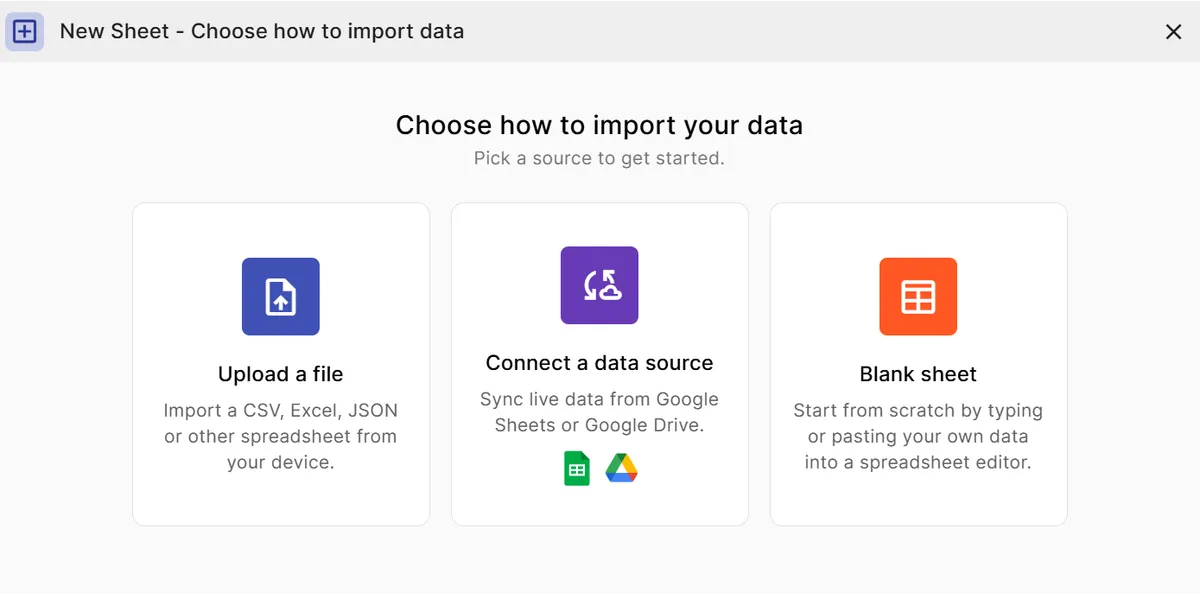
Step 1
Add your data
Paste a spreadsheet, or upload a CSV, Excel, TSV, or JSON file.
Step 2
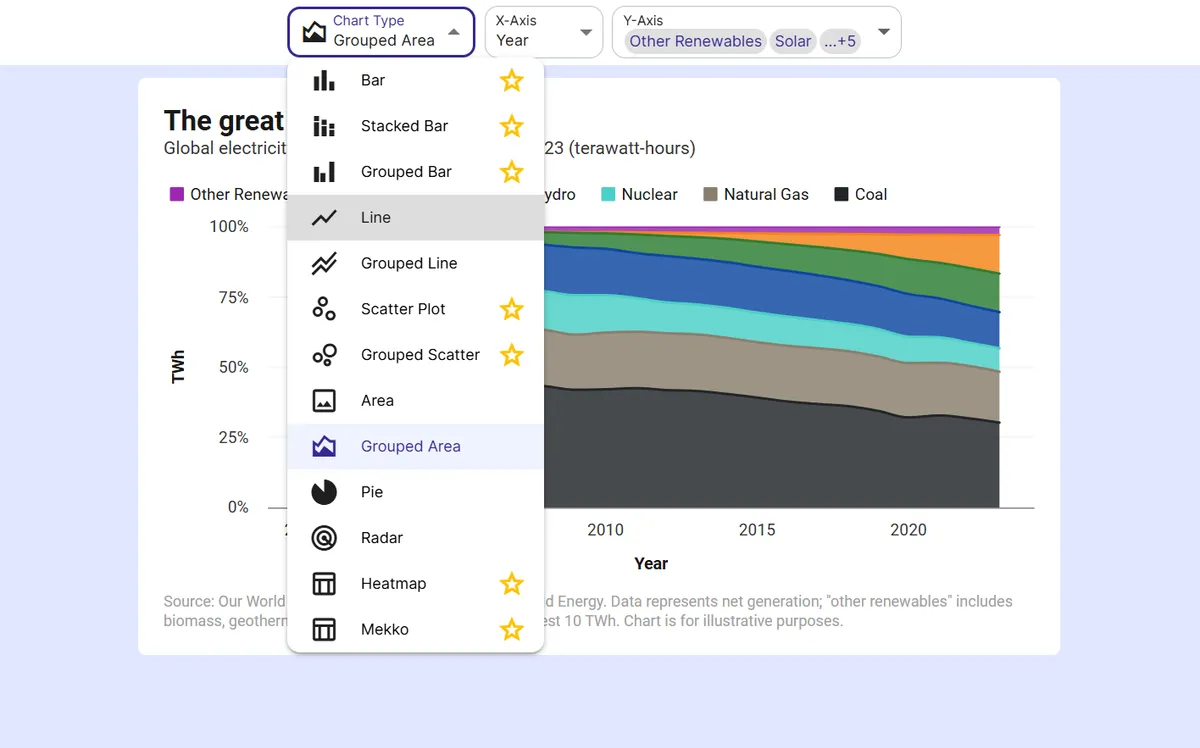
Pick the radar chart
InstaCharts auto-suggests a chart; switch to this type in one click.
Step 3
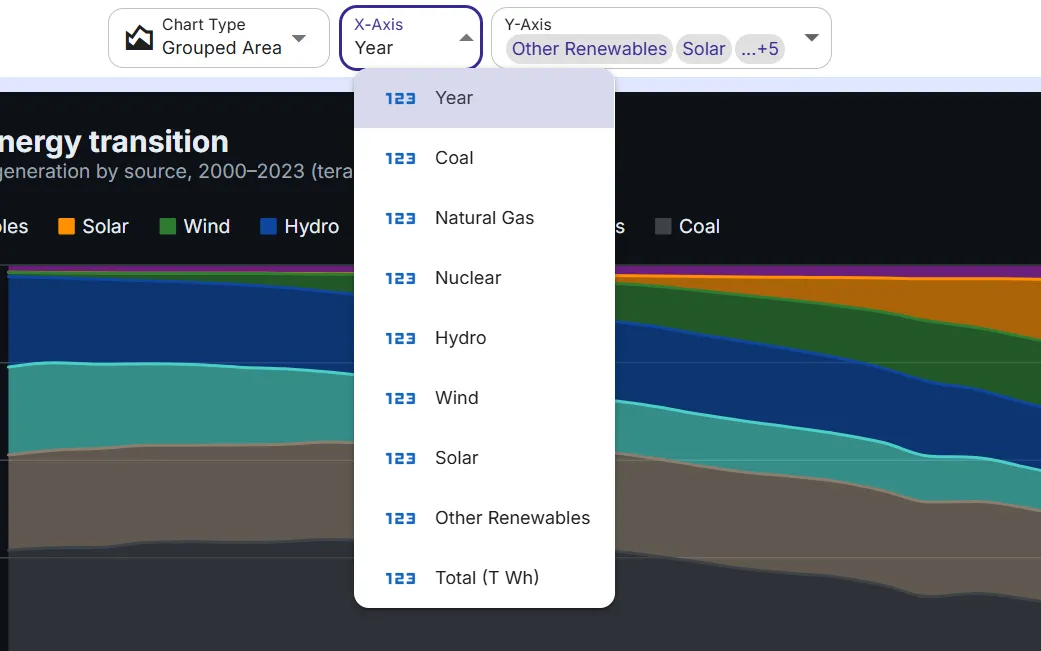
Map your columns
Choose which columns drive each axis, or accept the smart defaults.
Step 4
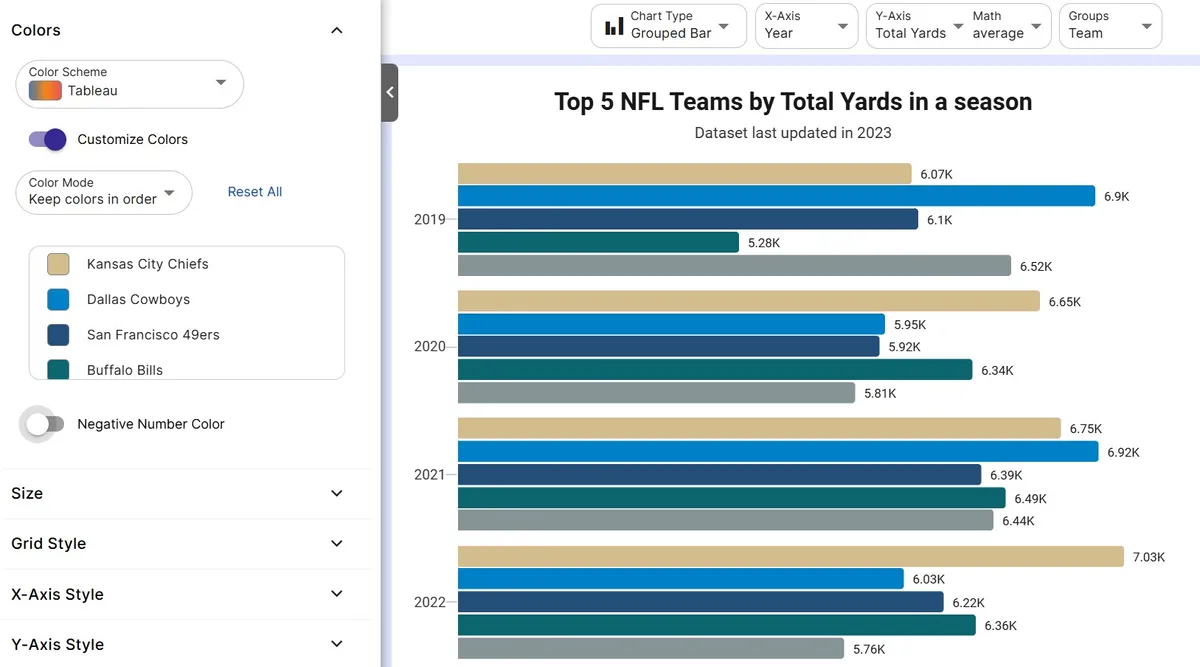
Customize styling
Adjust colors, labels, and titles to match your brand or report.
Step 5
Export or embed
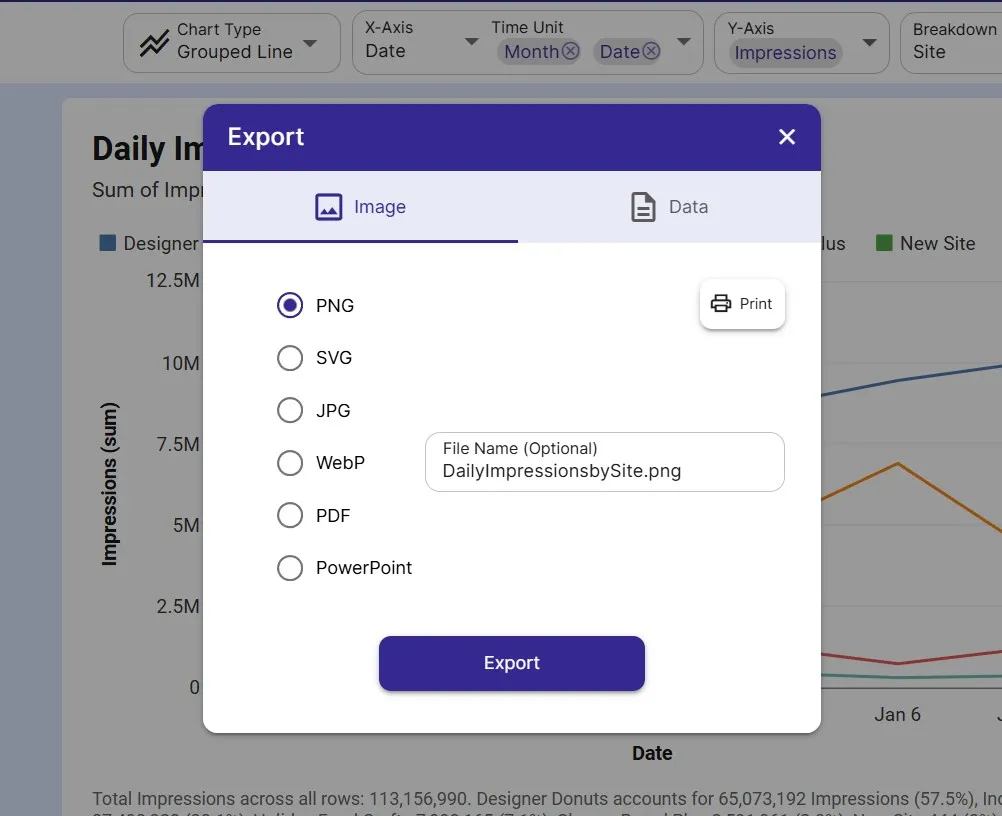
Download as PNG, SVG, or PDF, share a link, or embed a live, auto-updating chart.
FAQ
Radar Chart maker FAQ
Answers to common questions about making a radar chart with InstaCharts.
Is the radar chart maker free?
Yes. Creating and exporting a radar chart is free with no account. The free tier supports up to 500 rows and adds a watermark; paid plans from $10 user/mo remove it.
How many variables should a radar chart have?
Radar charts work best with three to ten variables. Fewer than three does not benefit from the radial layout, and more than ten spokes becomes crowded and hard to read.
What data do I need for a radar chart?
A category column for the spokes and a numeric column for the values. Add a breakdown column to overlay multiple profiles, such as different people, teams, or products.
Why do my values look distorted?
If variables sit on very different scales, one spoke can dominate the shape. Normalize the values to a common range first so each dimension contributes fairly.
Want the full reference?
Read the radar chart documentation.
Explore
Related chart makers
Compare related chart types, or browse every InstaCharts chart maker below.
Bar Chart Maker
Compare values across categories online
Line Graph Maker
Plot trends over time online
Heatmap Maker
Reveal patterns across a data grid
All InstaCharts chart makers
- Bar Chart Maker
- Stacked Bar Chart Maker
- Grouped Bar Chart Maker
- Line Graph Maker
- Grouped Line Chart Maker
- Area Chart Maker
- Grouped Area Chart Maker
- Pie Chart Maker
- Scatter Plot Maker
- Grouped Scatter Plot Maker
- Heatmap Maker
- Mekko Chart Maker
- Gauge Chart Maker
- Grouped Gauge Chart Maker
- Donut Chart Maker
- Waterfall Chart Maker
- Horizontal Bar Chart Maker
- 100% Stacked Bar Chart Maker
- 100% Stacked Area Chart Maker
- Trend Line Graph Maker
- Pie Chart Maker with Percentages
- Semi Circle Pie Chart Maker
- Likert Scale Chart Maker
- Survey Chart Maker
- Cash Flow Waterfall Chart Maker
- Budget vs Actual Chart Maker
See every option on the chart maker page.
Make your radar chart in seconds
InstaCharts makes data visualization easy, so you can build clear reports without design experience.