
Aggregation
Automatic aggregation is applied to most chart types in InstaCharts.
You can change the aggregation function applied through the Math dropdown on the chart toolbar, located next to the Y-Axis column. On charts that can plot more than one series, open the Y-Axis/Series dropdown to find a Math dropdown for each series.
Each option in the Math menu describes what it does. A star marks the recommended option for the column, based on its name. For example, a column named Revenue sounds like an amount, so Sum is recommended to add the values up into a total. A column named Rating sounds like a score, so Average is recommended.
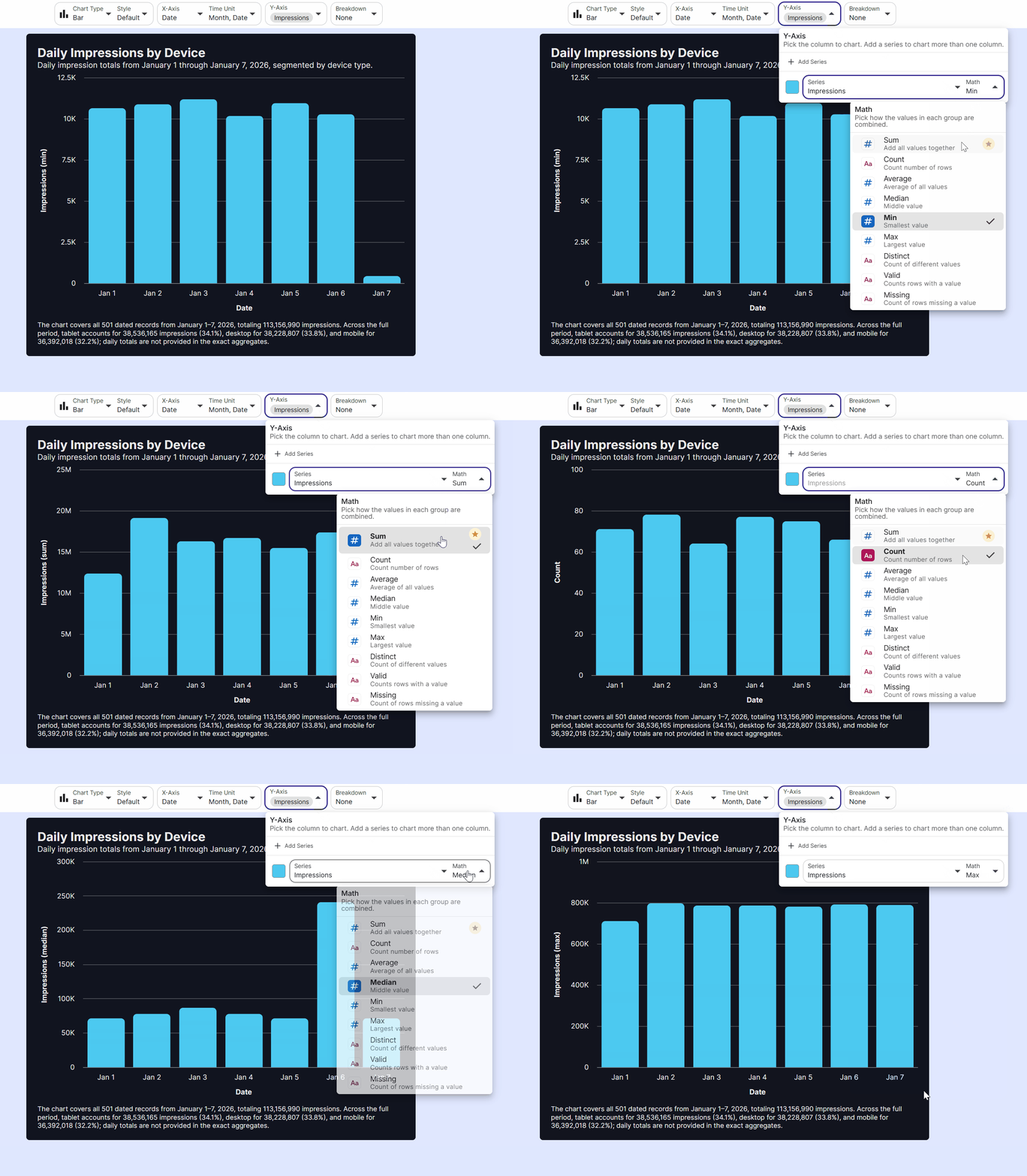
Aggregation performs calculations on a set of values and returns a single value. In the video above, the values on the y-axis are changing as the aggregation is changed.
Aggregation Functions
Below is a list of the aggregation functions you can apply to the Y Axis. In the UI, they appear next to the Y Axis under the Math dropdown. The functions listed depend on how the column is plotted. Columns plotted as numbers can use every function, while columns plotted as text or dates can use the text functions.
Numerical Aggregation
These are mathematical functions applied to the numerical values within a column:
- Sum Add all values together
- Average Average of all values
- Median Middle value
- Min Smallest value
- Max Largest value
Non-Numerical (Text) Aggregation
These are the functions that can be applied to non-numerical values:
- Count Counts number of rows
- Distinct Count of different values
- Valid Counts rows with a value
- Missing Count of rows missing a value
Related
- Formatting Data for Import - import raw, unaggregated rows and let the chart summarize them
- Column Types - how numeric and text columns are detected
- Limit Items - keep only the top or bottom values
- Filtering - narrow down the rows that feed the chart
- Chart Types - see which charts aggregate data